Biological Physics
While research on soft matter has traditionally been focused on synthetic materials, rapid developments in molecular biology have provided evidence that soft interactions and fluctuation phenomena play a vital role in biology, in particular on the level of the very fundamental processes such as cytoskeletal organization, force generation by molecular motors, cell motility, protein folding, gene replication, and signal transduction. There is a wealth of data about interesting and complex processes in biological systems.
Our goal is to analyze these systems in an interdisciplinary collaboration with scientists from all natural sciences. The vision is to understand how physical laws govern the material properties, operation of biochemical machinery, and the processing of information inside cells. One of the great challenges will be to formulate theoretical concepts which allow to study driven non-equilibrium systems with many structural and regulatory components. This might shed some light on the physical principles behind the hierarchical organization of living system with a rather precise level of control at all levels of hierarchy.
Introductory Review Articles
Current Research
-
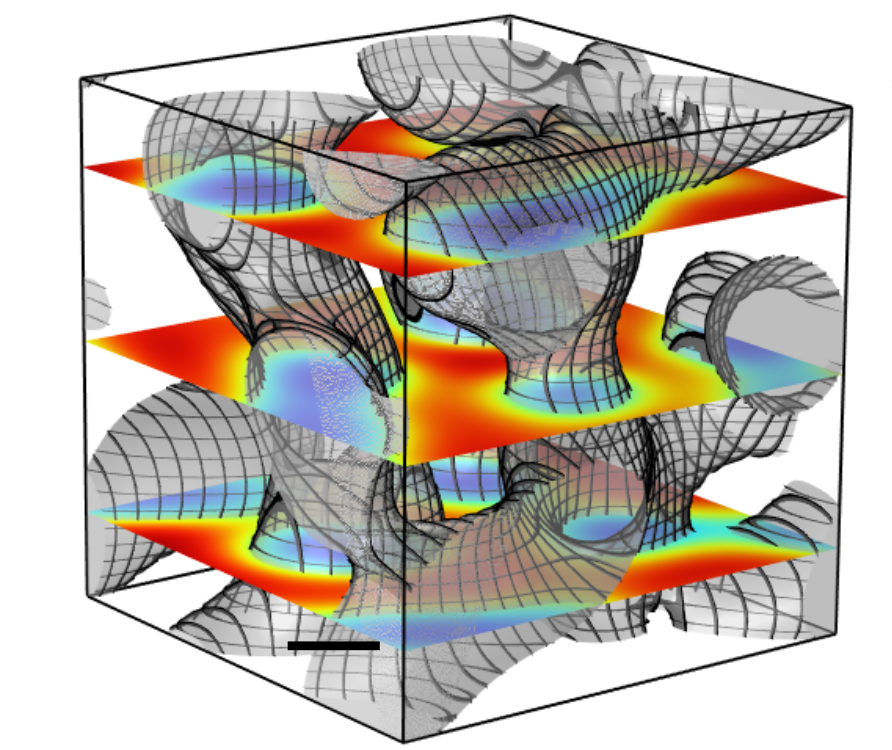
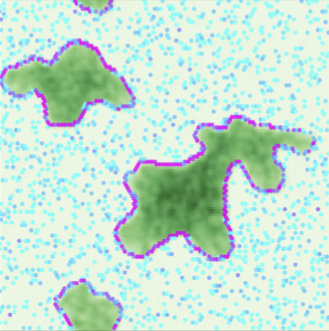
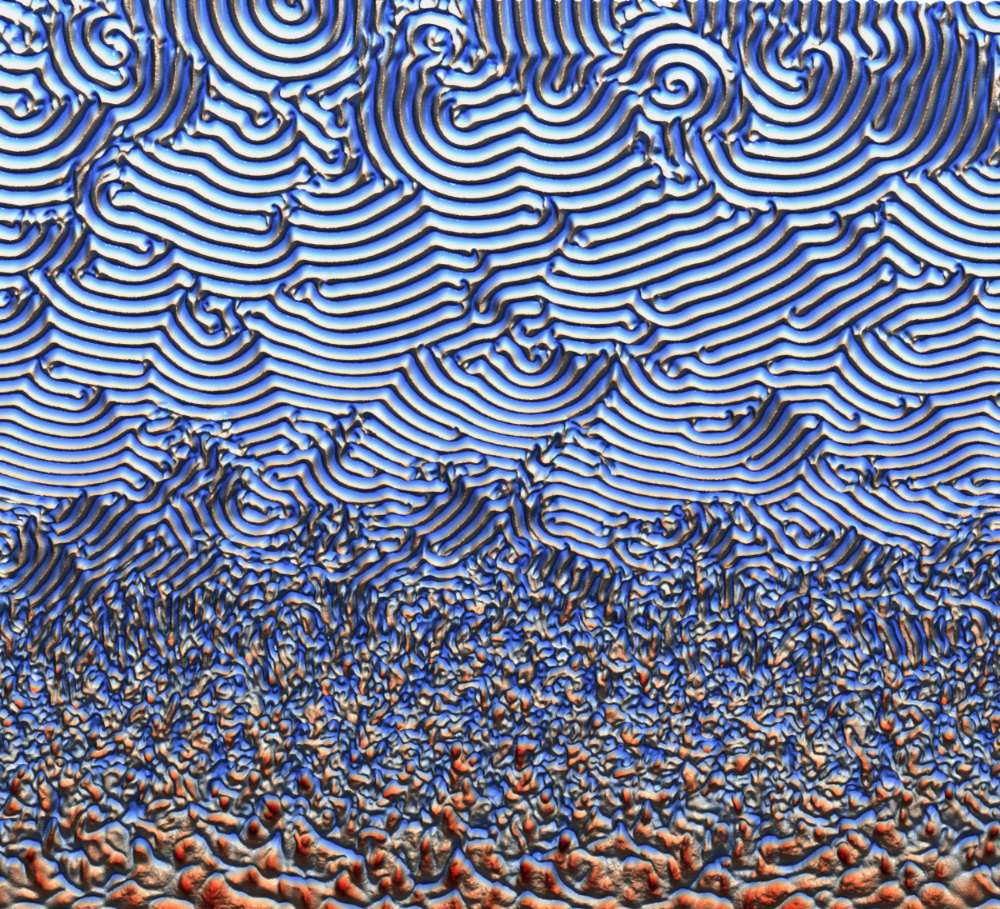
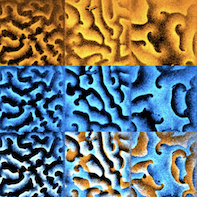
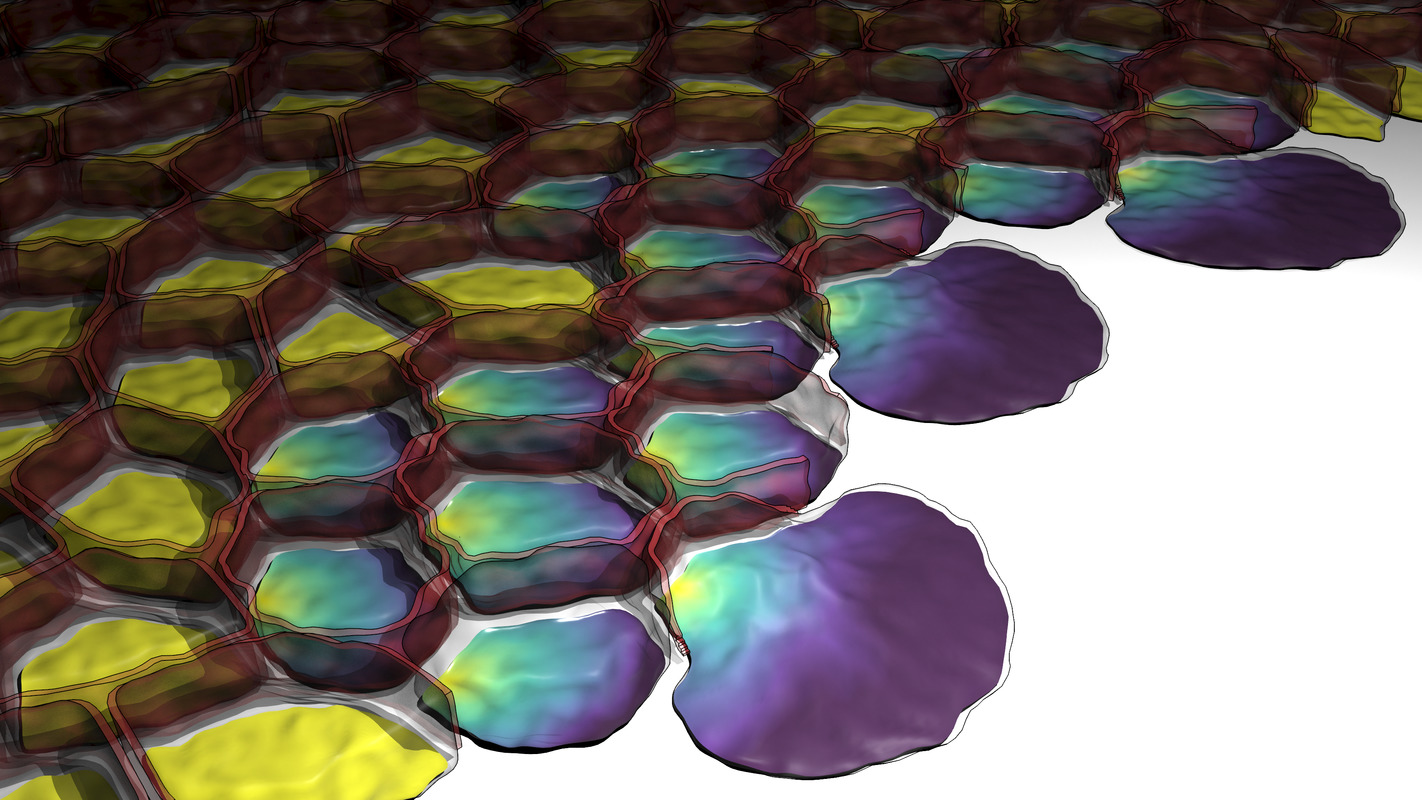
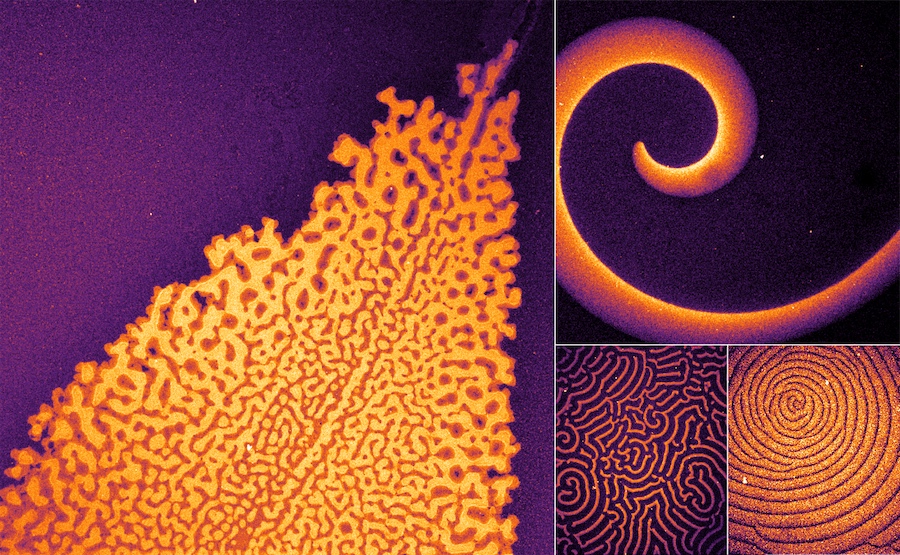
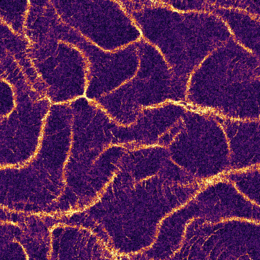
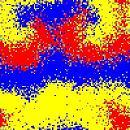
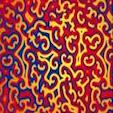
Many cellular processes rely on striking spatial patterns of proteins that constantly assemble and disassemble on membranes. In our new study, published in Nature Physics, we show that these active protein patterns can behave like foams and multicomponent liquid mixtures, even though there are no mechanical forces between the molecules. We introduce the concepts of “Turing mixtures” and “Turing foams” and develop a theory that predicts how their interface geometry and typical length scale are selected.
more
-
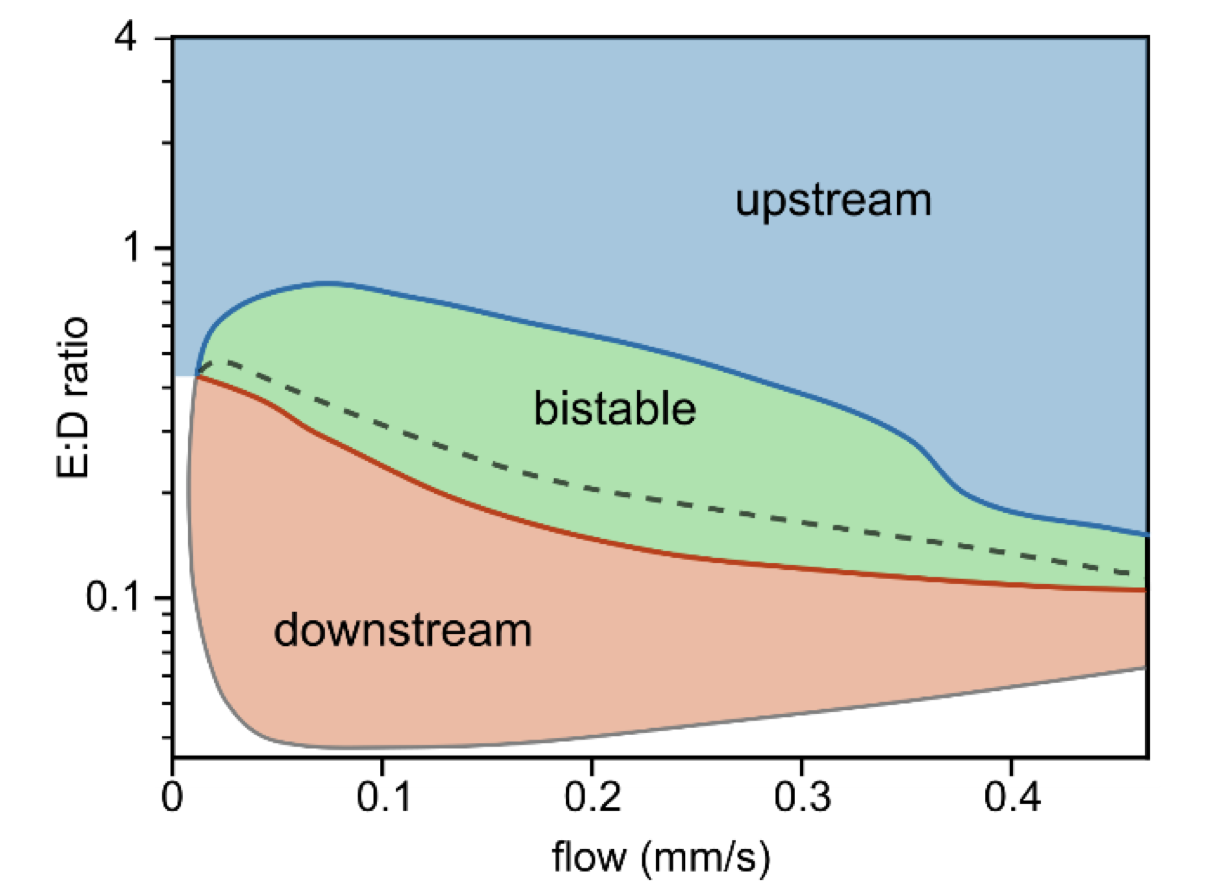
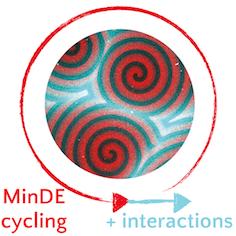
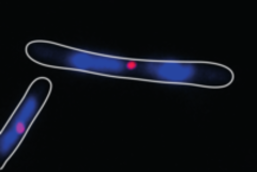
Understanding the physical underpinnings of dynamic intracellular organization remains central to elucidating spatial regulation in cells. Here, we present a comprehensive experimental and theoretical study of the Min protein system in Escherichia coli, revealing how robust and resource-optimal dynamic pattern formation underpins accurate division site selection. Using engineered strains with tunable expression of MinD and MinE, we construct an in vivo phase diagram of Min oscillations and uncover that pattern formation persists over a broad range of protein concentrations and physiological growth states.
more
-
The murine thymus exhibits a complex, convoluted medullary morphology essential for central tolerance, yet the physical principles underlying this structure have remained unclear. In this work, we present a theoretical model that explains how the medulla self-organizes through feedback between thymocyte signaling and epithelial growth.
Our model captures core experimentally validated interactions: chemotactic migration of thymocytes toward the medulla, their activation upon recognizing self-antigens, and the subsequent stimulation of medullary thymic epithelial cell (mTEC) proliferation. This feedback loop, termed thymic cross-talk, couples thymocyte selection to tissue growth.
We show that these interactions suffice to generate the observed cortico–medullary architecture through two mechanisms: a chemotaxis-driven accumulation instability and a growth-induced (Turing-like) instability. The resulting morphology adapts to changes in thymocyte production and degradation and matches phenotypes seen in wild-type and knockout mice.
Crucially, we find that the convoluted medullary structure enhances negative selection efficiency by improving thymocyte localization, offering a functional rationale for its form. These results suggest that the thymus architecture is not pre-imposed but emerges dynamically from the selective process it supports.
This work establishes a direct mechanistic link between immune function and organ form and offers a testable framework for understanding spatial organization in lymphoid tissues.
more
-
Understanding how cells generate shape changes is central to unraveling the physical basis of morphogenesis and synthetic cell design. Here, we present a quantitative theory of light-controlledcortical excitability in starfish oocytes, uncovering how programmable shape deformations arise from the interplay of biochemical signaling and mechanical response. In vivo experiments using optogenetically controlled GEFs decoupled from meiotic cues demonstrate that local or global illumination of starfish oocytes can generate a broad repertoire of mechanical behaviors—from transient pinching and surface contraction waves (SCWs) to catastrophic cell lysis. Our framework integrates these observations into a coherent chemo-mechanical model coupling nonlinear Rho dynamics to cortex elasticity, revealing the mechanisms by which optical stimuli steer intracellular contractility and cell geometry.
more
-
This lecture explores the fundamental principles and advanced concepts of nonequilibrium field theories and stochastic dynamics. The course focuses on stochastic processes in particle and field systems, emphasizing mathematical formalisms such as Langevin equations, Fokker-Planck equations, and path integrals. Additionally, we will discuss applications in soft matter physics, active matter, and non-equilibrium statistical mechanics.
more
-
Can we build predictive theories for self-organizing systems—spanning fluids, diffusion–reaction systems, soft/active matter, and living systems—without tracking every microscopic detail? Yes: by exploiting universality, symmetry, and conservation laws, and coarse-graining to reveal instability mechanisms, mesoscopic laws, and scaling behavior.
more
-
A new PNAS study reveals "delay-facilitated assembly"—a counter-intuitive mechanism where slow exchange between reaction compartments significantly outperforms fast exchange. By turning the "reservoir" into a control knob, this approach maximizes yield and minimizes time, offering a blueprint for building reliable synthetic systems that mimic nature’s efficiency.
more
-
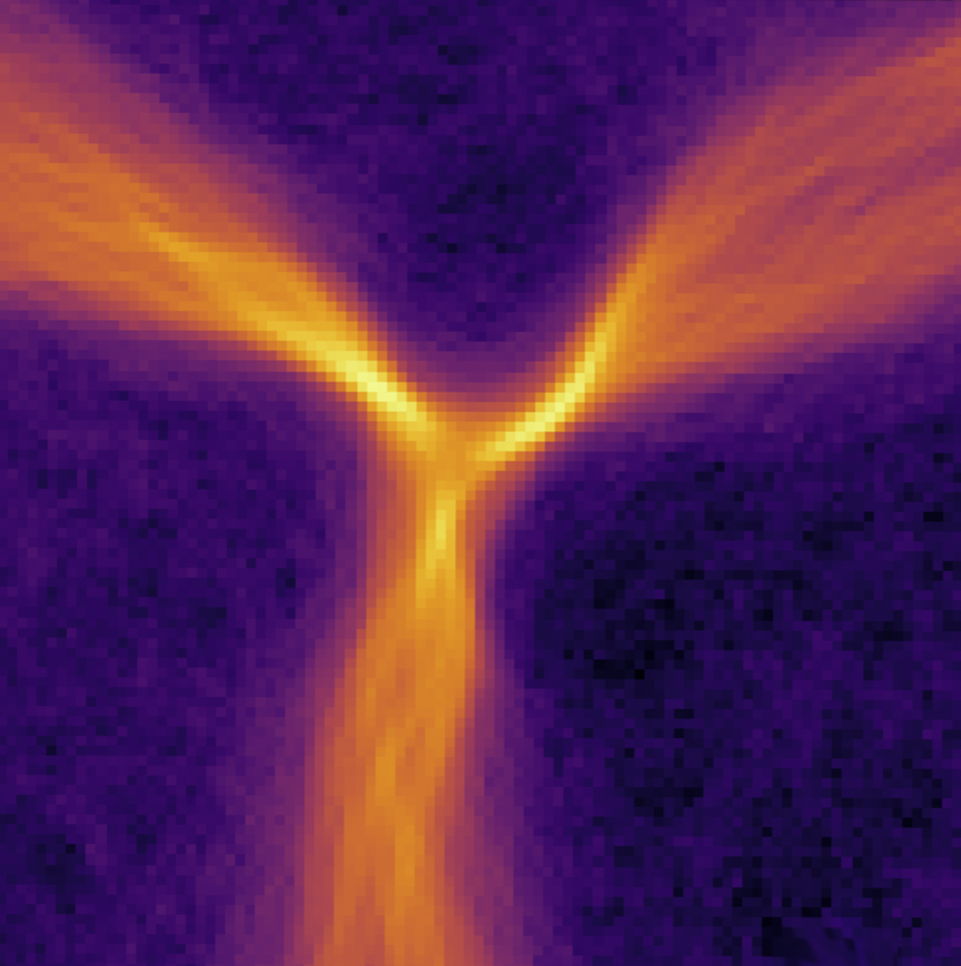
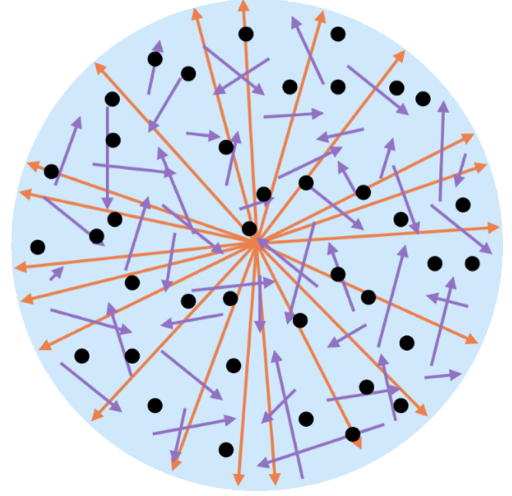
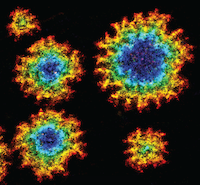
Understanding the complexity of living systems poses a significant challenge for modern physics. Active matter offers a platform to explore the fundamental principles driving emergent collective behavior and self-organization. Recent experiments have shown that microtubules interacting with kinesin-4 motors can form structures such as active aster-like micelles and a novel non-equilibrium phase known as active foam. We have developed a field theory to describe these active supramolecular structures, explaining how motor-mediated interactions between microtubules give rise to these macroscopic patterns. Our numerical simulations reproduce the active micelle and foam phases observed in experiments, as well as the density-controlled transition between them. In our model, this transition occurs via a branching instability, breaking the radial symmetry of the micelles and leading to bilayer branch growth along the perimeter.
more
-
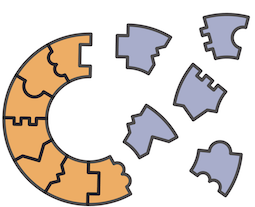
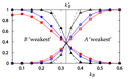
In biology and nanotechnology, tiny building blocks can quickly and robustly come together to form complex structures. In our study, we dive into this world of self-assembly and uncover a crucial factor: morphology, or the shape of these building blocks. While the importance of weak and reversible interactions between building blocks is well understood, our research sheds new light on how their shapes significantly influence the efficiency of self-assembly.
more
-
One of the hallmark features of active nematics is the formation of oppositely charged, point-like, topological half-integer defects that exhibit creation/annihilation dynamics. So far, such ±1/2 defects have been found only in dense and spatially uniform active systems, and it has been argued that they are absent in dilute, phase-separated active systems. In our study, we show that phase-separated active nematics can form condensed -1/2 defects of a new kind. In stark contrast to the well-studied homogeneous case, these new defects coincide with density peaks, lack a positively charged counterpart, condense nematic fluxes, and coexist with undulating dense bands from which they are formed by a new hierarchical condensation phenomenon.
more
-
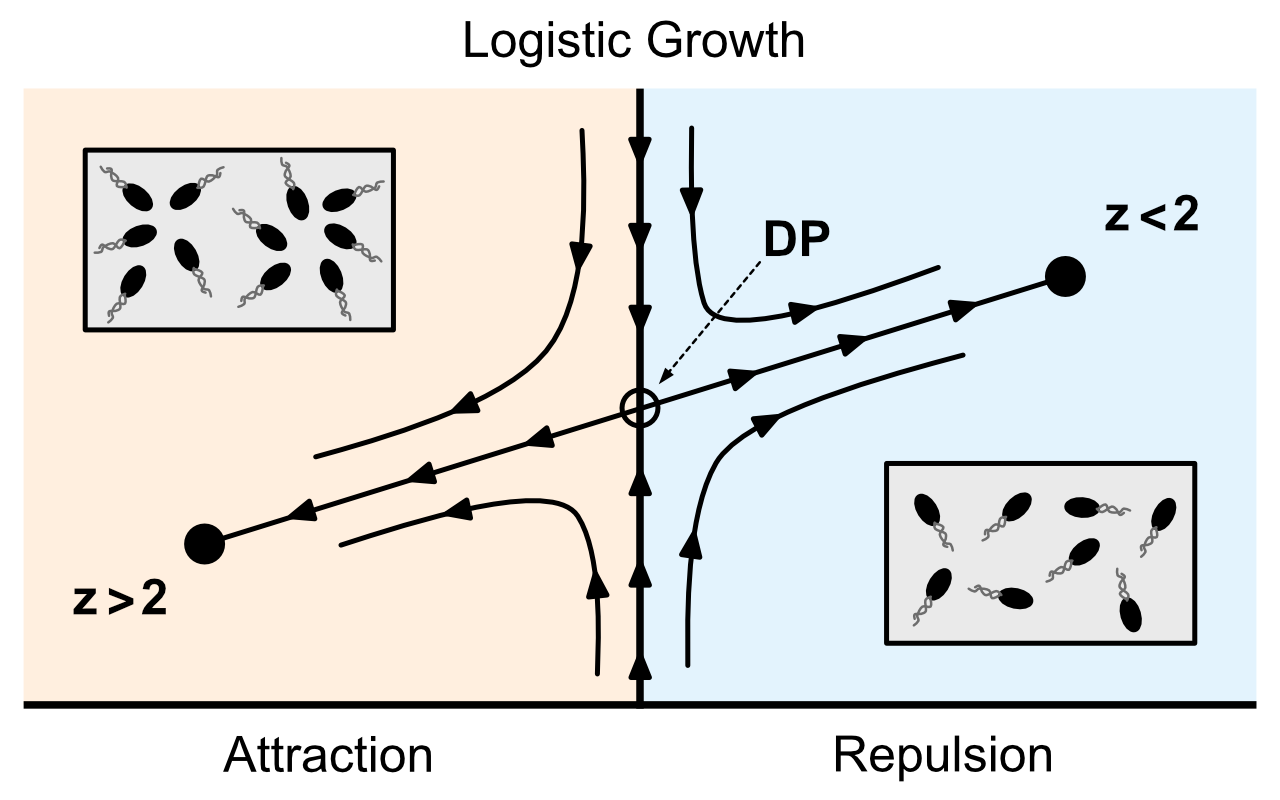
In studies of nonequilibrium phase transitions, many different forms of local interactions have been investigated. But how do long-ranged interactions influence the critical dynamics of a colony of active agents? In order to study this question, we analyze the critical dynamics of reproducing agents subject to long-range chemical interactions and limited resources. Specifically, we study a model of chemically interacting agents, whose population dynamics are accounted for by Fisher-Kolmogorov dynamics. The chemotactic interaction is modeled by Keller-Segel like active motion, i.e., the agents are assumed to preferably move along gradients in a chemical field sourced by themselves.
more
-
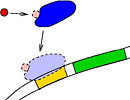
Can a living cell be synthesized de novo, and can we reconstruct such remarkable feature as cell motility in their biomimetic analogues? Cell motion is a fundamental aspect of life, involving intricate chemical and mechanical processes across various time and length scales. Recreating cell-like motion in a controlled environment is a challenging yet invaluable approach for unraveling the essence of life. In particular, generating persistent motion in liposomes driven by a mechanochemical feedback loop without the need for a cytoskeleton, remained elusive due to its complexity.
more
-
What are generic consequences of coupling local enzymatic catalysis to molecular interactions between enzymes and substrates in chemically active biomolecular condensates? To address this question, we studied a minimal model of enzymes that show liquid-liquid phase separation and convert a single substrate species into product, which in turn is eventually restored to substrate.
more
-
We explored the effect of advective bulk flow on the dynamics of membrane-bound protein patterns. We approach this question theoretically and experimentally by studying how Min protein patterns respond to bulk flow.
more
-
Cytoskeletal structures play essential roles in many cellular processes, including intracellular transport, cell division and cell motility. The formation and regulation of these structures involves many types proteins that associate with the cytoskeletal filaments, to regulate their nucleation and polymerization, to crosslink them, and to exert mechanical forces on them.
more
-
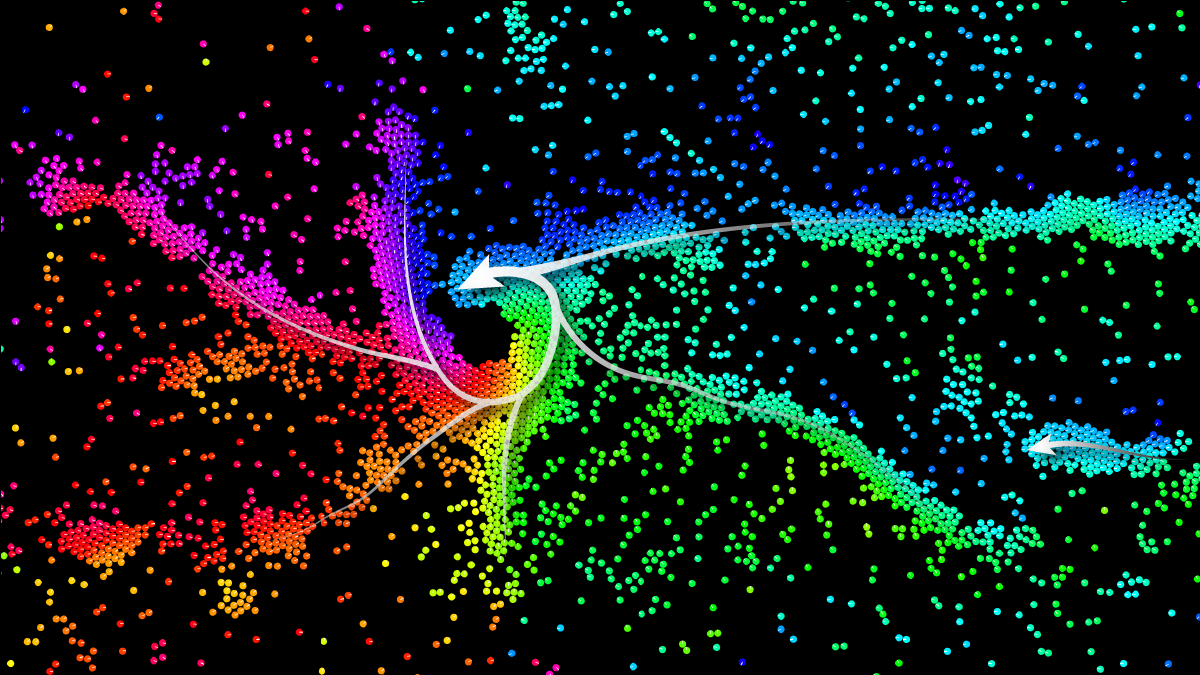
How are identical unsupervised units able to collectively self-organize an efficient aggregation process in which individual elements are guided towards selected locations so as to form ordered and information-rich structures? We introduce a new paradigm of communicating active matter for which local decision-making in response to a signal and transmission of information via chemical waves lead to collectively controlled self-organization over a hierarchy of collective dynamic states at multiple scales.
more
-
We address the intricate dynamics of self-organized pattern-forming systems that span multiple spatial and temporal scales, and demonstrate an approach that enables us to reconstruct and forecast the dynamics at small scales from a reduced dynamics at large length and time scales. Our work provides a new route to deal with complex multiscale dynamics that emerge in a broad range of physical systems.
Spatiotemporal patterns are vital for the organization of many biological processes such as cell division, collective cell migration, and morphogenesis. Although commonly assumed in theoretical approaches on pattern-forming systems, patterns generally do not emerge from homogeneity, but rather transition from one pattern to another over time and across different spatial regions – a key scientific challenge, as Turing pointed out in his seminal paper on pattern formation. Coarse-graining methods allow the dynamics of such multiscale systems to be reduced to the essential degrees of freedom at large scales. However, a drawback of traditional coarse-graining approaches is that information about the patterns at small scales, that are integrated out, are lost and cannot be reconstructed from the dynamics at large scales.
more
-
Proteins control many vital functions in living cells, such as cell growth and cell division. Reliable coordination of these functions requires spatial and temporal organizaton of proteins inside cells, which encodes information about the cell geometry and the current state in the cell cycle. Here, we review how protein patterns are guided by the cell size and shape, by other protein patterns that act as template, and by the mechanical properties of the cell. We posit that understanding the controlled formation of protein patterns in cells will be an essential part of understanding information processing in living systems.
more
-
Time efficiency of self-assembly is crucial for many biological processes. Moreover, with the advances of nanotechnology, time efficiency in artificial self-assembly becomes ever more important. While structural determinants and the final assembly yield are increasingly well understood, kinetic aspects concerning the time efficiency, however, remain much more elusive.
more
-
The development of alveoli in organoids derived from mammary-gland tissue follows the same physical principles as the formation of discrete droplets in a water jet. Many of the organ systems found in animals exhibit highly complex structures, which are essential for their various functions. How such structures develop during embryonic development is a central question in biology. Together with the lab of Andreas Bausch(TUM) we investigated this fundamental problem using mini-organs termed organoids as their experimental system. Our focus was on the spherical ‘alveoli’ in which the ducts of the lactating mammary gland terminate. The study demonstrated in detail that these alveoli form according to the same principles as droplets in a jet of water emerging from a hose.
more
-
Self-organized spatiotemporal patterns are crucial for the function of organisms on all levels, from intracellular molecular organization to developing embryos. A central problem in understanding the formation of intracellular protein patterns is the coupling between the membrane surface and the cytosolic bulk. This bulk-surface coupling is a fundamental and general property of protein-based pattern formation, where proteins undergo attachment and detachment at the cell membrane. However, the consequences of this bulk-surface coupling remain poorly understood. We have developed a systematic theoretical understanding of pattern formation in a concrete bulk-surface coupled system, namely the Min system of E. coli - a paradigmatic model system for studying biological pattern formation in vivo and in vitro. Our theoretical findings, in combination with experiments confirming the theoretical predictions, have allowed us to finally solve a long-standing puzzle, namely the qualitative differences between in vivo pole-to-pole oscillations and in vitro waves of Min proteins.
more
-
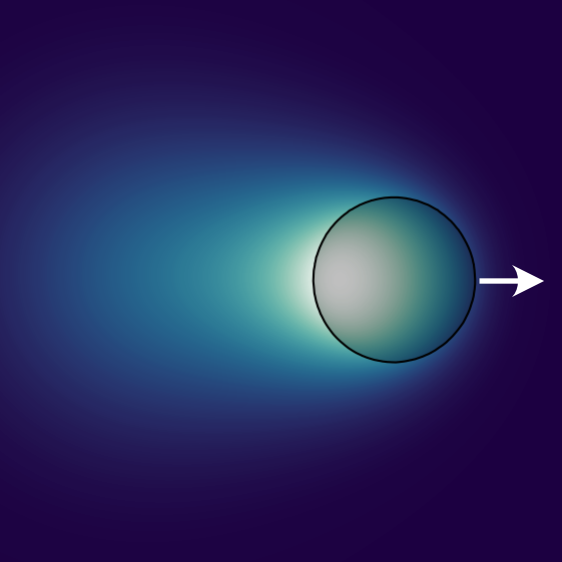
Cells must ensure that molecular cargoes are delivered in a timely manner to their intended destinations in order to perform their biological functions. To do so, cells employ sophisticated transport mechanisms that are usually based on specific interactions, where energy-consuming motor proteins convey cargo to its destination. In a joint effort between experiment and theory, we have uncovered an additional mode of transport driven by pattern-forming reaction-diffusion systems. We demonstrated that ATP-driven protein patterns can induce diffusiophoresis of other, completely unrelated biomolecules by a genuinely nonequilibrium coupling. Our findings indicate a rudimentary and purely physical transport process so far not described in biological systems, which does not rely on specific interactions and is therefore robust against mutations.
more
-
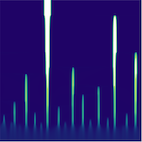
How does a macroscopic length scale emerge as a result of a collective pattern formation process from microscopic dynamics? This question is of great interest in a broad class of far-from-equilibrium systems, including active matter, granular media, and intracellular phase separation. In our work, we study length scale selection in the important class of reaction—diffusion systems dominated by mass-conserving reactions. Our main finding is that wavelength selection in such systems can be understood as a coarsening process that stops at a certain point. Based on this idea, we present a quantitative theory that reveals the physical mechanism of coarsening in mass-conserving reaction–diffusion systems and provides a simple, intuitive criterion for when it stops.
more
-
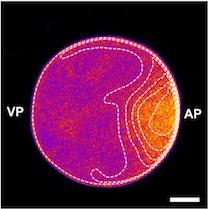
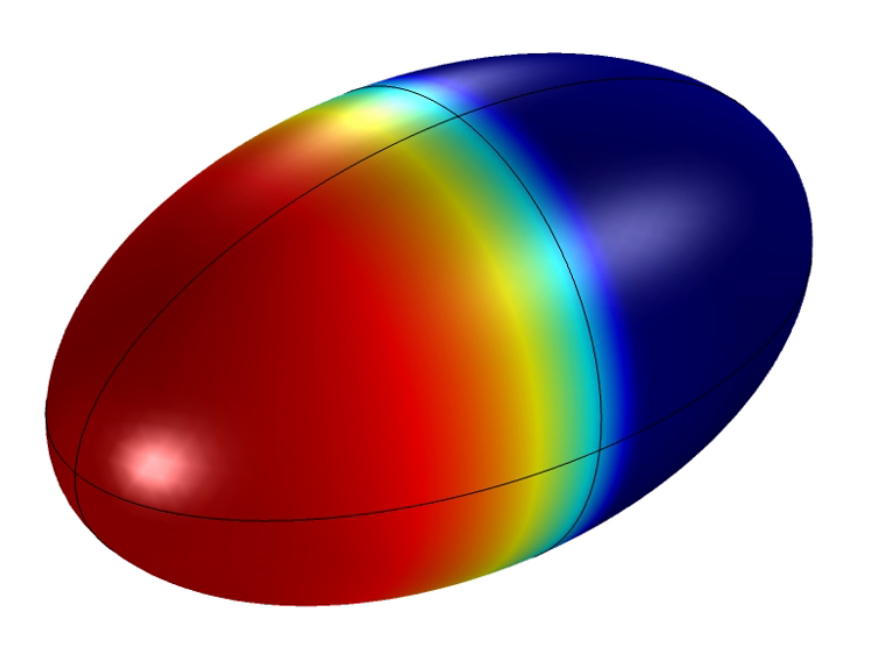
In this work, we demonstrate how protein-based pattern formation in cells can be robust against large changes of cell shape. Specifically, we show how a surface contraction wave in starfish oocytes adapts to the cell shape to ensure that it robustly arrives at the same nucleus-located target position on the membrane, regardless of the cell shape. Using a combination of biophysical theory and experiments, we uncover a novel shape-adaptation mechanism that arises from a hierarchical sequence of protein patterns, i.e. by “patterns
forming patterns” (Turing, 1952). Such a mechanism based on a hierarchy of patterns may constitute a general physical principle to transduce cell-shape information to biochemical
regulators, facilitating cell-shape sensing, cell- shape control and protein positioning.
more
-
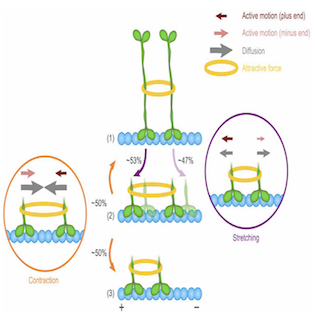
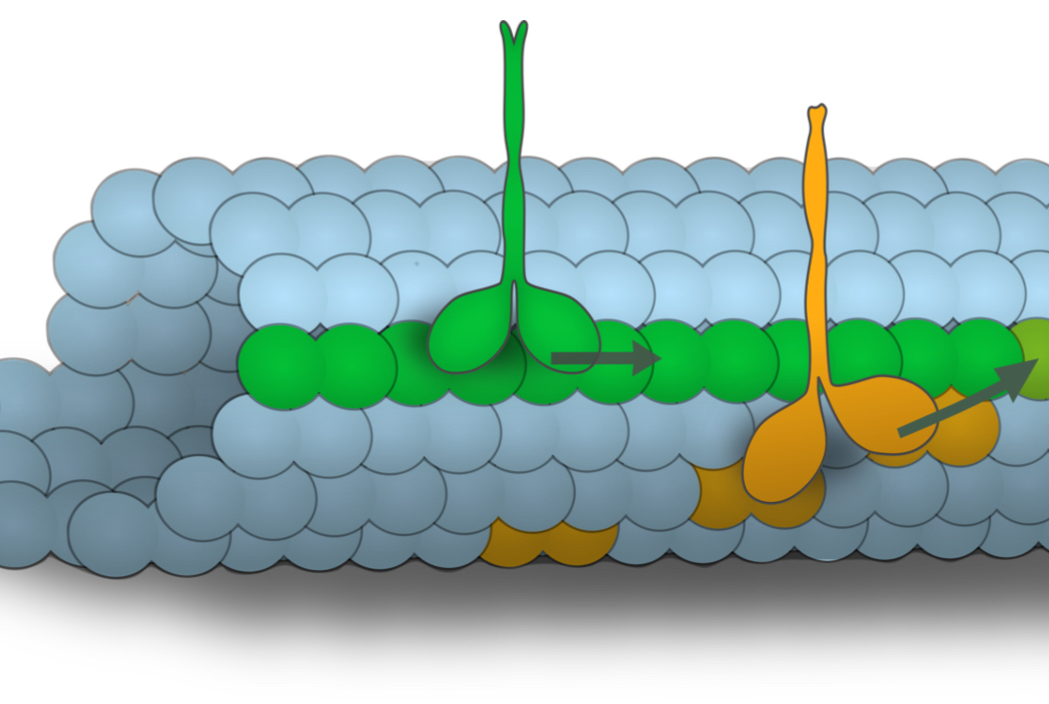
In this interdisciplinary work, we have combined experimental and theoretical approaches to reveal the mechanism underlying directionality switching of kinesin motors – a longstanding problem in the field of motor proteins. The majority of kinesins are plus-end directed and their catalytic domains are N-terminally located. Conversely, members of the minus-end-directed kinesin-14 family carry their catalytic domains at the C-terminus. However, nearly a decade ago, it was discovered that some mitotic kinesin-5 motors (with N-terminal catalytic domains) are minus-end directed and, moreover, can switch directionality under various experimental conditions. These surprising findings challenged the accepted paradigm that kinesin motors are exclusively unidirectional – and refuted the notion that kinesins with catalytic domains at or near the amino-terminus are plus-end directed.
more
-
Topology describes properties of systems that are preserved under continuous deformations and only change step-wise. We have shown that topology explains a certain transition in evolving populations, opening the door for applications of topological phases in biological systems. Topology is a long-standing theme in physics and was first used to characterize phases of condensed matter in the context of the Quantum Hall effect in the 1980’s. Topological arguments explain why these phases are located at the system’s edge and why they are robust against perturbations of internal interactions and external noise.
more
-
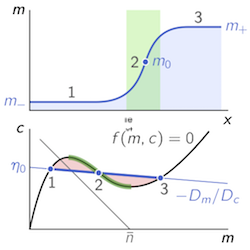
In this study, we present a novel theoretical framework that extends the geometric concepts underlying the analysis of nonlinear ODEs to spatially extended, pattern-forming, non-equilibrium systems, as described by reaction-diffusion equations. In recent years, experimental studies of protein pattern formation (both in vivo and in vitro) have sparked new interest in the dynamics of reaction–diffusion systems. Yet, general theories for reaction–diffusion systems have remained limited to the linear regime in the vicinity of homogeneous steady states, where the system’s dynamical properties can be extracted from the Jacobian (linearization of the dynamics around the homogeneous steady state). In general, the strongly nonlinear dynamics of pattern formation far from the homogeneous steady state remains inaccessible to this approach and has been amenable to numerical investigation only.
more
-
Self-assembly and self-organisation are two fundamental concepts used to explain the astonishing ability of natural systems to autonomously generate complex structures and patterns. Moreover, the artificial fabrication of complex nanostructures via self-assembly is assumed to be of great relevance for future technologies in medicine as well as in engineering, biology and nanotechnology. However, it remains unclear what conditions must be met for such processes to function in a robust and resilient way, and which generic mechanisms apply. A better understanding of the principles and pitfalls of the processes involved might therefore be essential and indicatory for the future development of these fields.
more
-
Many of a cell’s functional constituents such as organelles need to be distributed and organized in a highly orchestrated manner within the cell. To this end, they are actively transported by molecular motors on the two cytoskeletal components: microtubules and actin filaments. Although it is long recognized that motion and an interplay of the dynamics on these two cytoskeletal components is vital to ensure the proper organization of proteins within a cell, general mechanisms that govern the cell-wide distribution of organelles are elusive. In this project we addressed this problem for the case of dark pigment organelles in highly specialized skin cells of fish and amphibians. By a redistribution of these pigment organelles within a cell, the corresponding animals are capable of adapting their skin color to environmental factors. In collaboration with the group of Dr. Zeynep Ökten at the TU Munich, we related biomolecular changes of individual motors that move the pigment organelles on the cytoskeleton to a cell-wide distribution of the organelles.
more
-
Many different processes during development and growth, such as cell division, proliferation and motility, depend on spatial cues for proper functioning. Intracellular signaling proteins establish the required spatial orientation by forming polarization patterns along specific axes of the cell body.
more
-
Cells perform a variety of vital tasks ranging from cell division to motion and force generation. These abilities are intrinsically dynamic and rely on active network structures consisting of cytoskeletal filaments and crosslinking motor proteins. How does collective dynamics at the macroscopic level emerge from interactions of individual filaments and motor proteins? We address this open question through a conceptual model for motor-induced motion in networks of interconnected filaments. A prominent representative of this class of structures is the mitotic spindle where motor-driven filament flux is essential to maintain shape and functionality.
more
-
In recent years, a large number of experimental studies has been published, addressing the emergence of single and collective cell migration in a large variety of different setups and for a number of different cell types. With this solid body of experimental data as a basis, we aim to develop a comprehensive mechanistic picture that captures the emergence of collective phenomena as a function of single cellular traits. In particular, we aim to reconcile the two limiting cases of single-cell motility and tissue dynamics.
more
-
Self-organized concentration patterns are crucial for the development and function of organisms on all levels. However, there is a large gap of knowledge on how different molecular features determine the emergence of patterns. Systematic design on the molecular level requires understanding of the underlying principles and the role of specific molecular features.
more
-
Many key intracellular processes are spatially guided by self-organized protein patterns, which form through an interplay between diffusion and biochemical reactions. Biochemical coupling (via protein attachment) between cytosol and membrane is a crucial and recurring motif among the formation of protein patterns. In particular, some key proteins are capable of recruiting other proteins from the cytosol to the membrane, which results in a nonlinear feedback mechanism.
more
-
There is now growing evidence of the impact of geometric confinement on the patterns of motion of biological materials. For example, experiments on cell monolayers and bacterial suspensions have shown that the interplay between the activity of the cells and the confinement size can stabilise otherwise chaotic flows of cells into coherent motion.
However, many such cellular systems are not composed of conserved number of particles. Indeed, in most natural conditions, cells in a monolayer or bacterial cells in a biofilm regularly proliferate and form a progressive front that infiltrates the surrounding environment. No current continuum theory in cell mechanics or in active matter can explain the mechanism of active matter invasion within confined spaces.
more
-
Active remodelling of the membrane curvature is key to cellular motile processes, including cell migration, endocytosis and polarisation in morphogenesis and development. A fundamental problem of molecular cell biology in conjunction with physics and mathematics is therefore to understand the evolutionary, developmental and functional rationale for these membrane shapes, as well as the mechanisms used by cells to produce them.
more
-
When two species interact and adapt their fitness, only the fitter species survives. This is the case for well-mixed systems, as well as for metapopulations, in which smaller subpopulations are coupled by mixing or mobility. We show that in the latter case, both species can coexist when the species adapt their fitness to the environment with a delay.
more
-
Active transport by molecular motors along a filament is a vital process in cells. The motion of single motors has been studied in great detail and it has been shown that different species of motors often exhibit distinct stepping modes. For all super families of molecular motors (kinesins, dynein, and myosin) helical pathways with different pitches are probably the rule rather than the exception. But while their individual behavior is known in great detail, understanding their collective properties remains challenging. In this respect, a multitude of models based on the totally asymmetric simple exclusion process (TASEP) has by now established a clear picture of collective single species transport. However, as we have now shown, a mixed population of molecular motors with different gaits displays very distinctive collective behaviors that can not be accounted for by previous analyses and models.
more
-
Intracellular positioning of proteins is important for several vital processes in bacterial cells, including cell division. Bacterial cells generally divide symmetrically by forming a contractile ring, which is progressively constricted to form two daughter cells of equal size. An important question to address is how a bacterial cell can identify mid-cell to divide there. In our work we have developed a mathematical model that explains how the plane of division is specified in the rod-shaped bacterium Myxococcus xanthus.
more
-
Life relies on the emergence of order. Understanding this unique ability of living organisms to self-organize their constituents into functional ensembles is the declared central objective of active-matter physics. Recently, several breakthroughs have demonstrated that principles of active matter are indeed capable of describing the emergence of robust types of macroscopic order, such as topological or defect-dominated states in cells or tissues. Living active systems are not only robust, they also display a degree of malleability.
more
-
Many fundamental cellular processes are spatially regulated by self-organized protein patterns, which are often based on nucleotide-binding proteins that switch their nucleotide state upon interaction with a second, activating protein. For reliable function, these protein patterns must be robust against parameter changes, although the basis for such robustness is generally elusive. Here, we take a combined theoretical and experimental approach to the E. coli Min system, a paradigmatic system for protein self-organization.
more
-
Molecular motors of the kinesin-8 family are important regulators of the length of microtubules, filamentous polymers which play vital roles in chromosome segregation and molecular transport. In our work we have addressed the question how length regulation functions in compartments of finite size, i.e., when the availability of protein is limited.
more
-
Complex systems in biology, chemistry and physics are in general nonlinear and far from equilibrium, intricately coupled and heterogeneous. Why then do they not simply collapse, run out of control or become chaotic?
The canonical theory of pattern formation deals with nonlinear systems that are near a global equilibrium state and where nonlinear interactions have a stabilizing effect. However, in the real world this is rarely the case: collective effects in biological, ecological, or economic systems, can lead to sudden, dramatic changes in the dynamics
more
-
Entropy and topology are major determinants of the complex dynamics and emergent behaviour of soft matter systems. In particular, the correct description of the release of topological constraints still poses a major challenge in almost any such system. In a series of seminal papers, de Gennes, Edwards and Doi formulated the reptation theory of entangled polymer solutions, which has become a paradigm in the field of soft-matter physics. Not only did the theory introduce new physical concepts, it was also highly successful in explaining many of the unusual properties and collective phenomena exhibited by materials comprised of flexible polymers. Importantly, reptation theory is a mean-field theory, as it essentially replaces the effect of the complicated many-body interaction between the polymer chains by a constraining tube along which polymers move in a snake-like fashion.
more
-
Bacteria live in unpredictable environments, which deeply affect their evolution. Changes in nutrients abundance, for example, make the population grow and shrink. This, in turn varies the impact of single birth and death events on the genetic makeup of the population. Studying the coupled effect of these sources of randomness, we show that it promotes the survival of disadvantaged strains (such as public good producers). Our results are published on Physical Review Letters.
more
-
Bacterial cells communicate with one another by using chemical signal molecules, which they synthesize and secrete into their surroundings. By this means, the behavior of an entire population can be controlled and coordinated. We have shown theoretically how such behavior can be accomplished through an ecological feedback even when only a subset of cells actually emits the signal. Our findings are published in the online journal eLife.
more
-
Cellular protrusions as filopodia or stereocilia are finger-like extensions of a cell projecting into the surrounding environment. Their shape is maintained by actin filaments that are cross-linked into more rigid bundles. Protrusions have an important role in different contexts ranging from cell migration and wound healing to signal transduction. For the functioning of the protrusions proteins have to be transported to the protrusion tips. Molecular motors as myosins can fulfill this task by converting chemical energy from ATP hydrolysis into directed movement along those actin filaments, pulling the proteins as cargo behind them.
more
-
In eukaryotic cells, a network of highly dynamic filamentous biopolymers, called microtubules, is involved in many vital processes such as intracellular organization and cell division. To ensure a proper functioning of these processes, a precise regulation of the microtubule network is inevitable. It relies on an intricate but largely unsolved interplay of a plethora of microtubule-associated proteins. In our study, we employ a mathematical model to elucidate mechanisms exploited by two central microtubule-regulating proteins to ensure efficient regulation.
more
-
In this work, we probe a fundamental question in cellular and developmental biology: how do self-organized (Turing) protein patterns evolve with cell growth and achieve robustness in a fluctuating environment? Whereas studies on the effect of noise and boundary growth on cellular metabolism have lead to great advances in the past decade, our understanding of dynamic spatial organization is lagging behind in this context despite its pervasive importance. Essentially, adding geometric perturbations and spatial heterogeneity to the already complex problems of spatio-temporal patterns easily drives them beyond the accessibility of present approaches.
more
-
Living systems form an intriguing class of active soft matter. Indeed, cells are constantly fighting decay to thermal equilibrium, at which they would be dead. On the molecular scale, their non-equilibrium dynamics involves a complex and seemingly random arrangement of motions and forces. Due to this randomness, however, active jittering of nano-sized particles inside biological systems can be mistaken for Brownian motion. A natural non-invasive method to study how non-equilibrium dynamics manifests on different scales in active matter is by observing fluctuations of a tracer filament. In our recent paper [1], we develop a theory for the non-equilibrium dynamics of such tracer filaments in a motor-activated network.
more
-
How can you tell if a fluctuating system is in or out of thermodynamic equilibrium? Systems in thermodynamic equilibrium are not only characterized by time-independent macroscopic properties, but also satisfy the principle of detailed balance in the transitions between microscopic configurations. Living systems function out of equilibrium and are characterized by directed fluxes through chemical states, which violate detailed balance at the molecular scale. We introduce a method to probe for broken detailed balance and demonstrate how such nonequilibrium dynamics are manifest at the mesosopic scale. The periodic beating of an isolated flagellum from Chlamydomonas reinhardtii exhibits probability flux in the phase space of shapes.
more
-
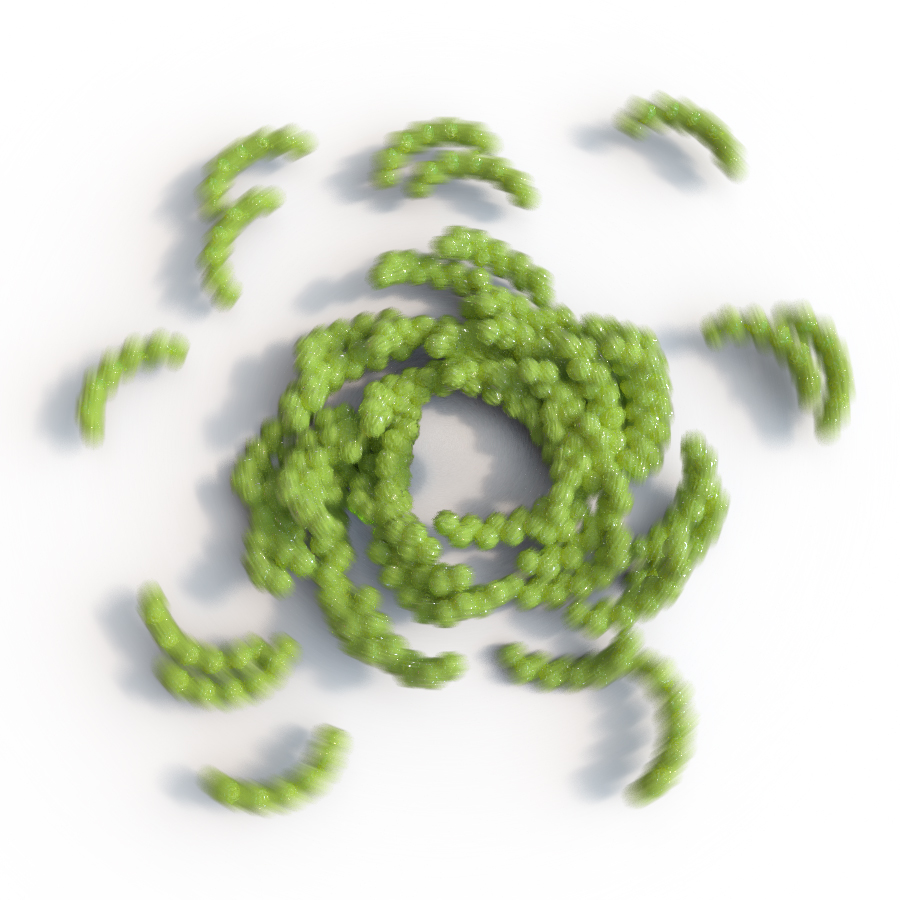
A critical component of the bacterial cell division machinery is a contractile polymer structure, called Z-ring, which performs cytokinesis. Rather than being a single, closed polymer ring, the Z-ring is composed of multiple, overlapping FtsZ filaments. However, how self-organization into this structure occurs, remains unknown and is subject to extensive research. Recent experiments [1] of FtsZ on a supported lipid membrane have shown that FtsZ polymerizes into curved polymer filaments, which effectively move via treadmilling. These filaments collect into dynamic rings which resemble the Z-ring in size and structure. The effect of chirality and directed motion on the collective dynamics remains, however, poorly understood. In our study, we provide a quantitative analysis how these systems self-organize into different patterns.
more
-
Living organisms generate forces to move, change shape and maintain their internal functions. These forces are typically produced by molecular motors embedded in networks of fibers. While these motors are traditionally regarded as the defining elements of biological force generation, we have shown recently that the surrounding network also plays a central role in this process. Indeed, rather than merely propagating forces like a simple elastic medium, fiber networks produce emergent, dramatically amplified stresses, and can go so far as reversing small-scale extensile forces into large-scale contraction.
more
-
According to the Einstein-Stokes relation different Brownian particles of equal size must have the same diffusion constant. However, particle diffusion or motility can also originate from non-thermal, active processes. In this case equal-sized particles can indeed exhibit different diffusivities or motilities. Throughout the last 5 years the influence of size differences, shape, mass and persistent motion on phase separation of active particle systems has been intensively studied. For binary mixtures, however, former research focused on particles with pronounced persistence in motion, while the exclusive role of differences in diffusion constants remains elusive.
more
-
Protein patterns play a major role in establishing cell polarity and guiding cell division processes.Examples include spatio-temporal oscillations in the MinCDE system of E. coli, and the formation of narrow/tightly localized protein caps in the Cdc42 system of S.cerevisiae. The formation of these patterns requires biochemical processes that sense and adapt to the geometry of the organism. Previously suggested mechanisms either require proteins that are able to directly sense membrane curvature, or are based on nonlinear diffusion-reaction systems that can generate geometry-adapted patterns. In Bacillus subtilis, there is good evidence suggesting that DivIVA recognizes negative membrane curvature directly by a mechanism which is intrinsic to this cell division protein. In contrast, enrichment of MinD at the cell poles in E. coli or formation of Cdc42 caps in S. cerevisiae is an emergent property of the collective dynamics of several proteins. A clear disadvantage of such self-organized symmetry breaking by means of a dynamical instability is that the kinetic parameters must be fine-tuned in order to allow the establishment of a stable polar pattern. This need for fine-tuning also poses a particular challenge for the utilization of functional, pattern forming modules in reconstituted synthetic systems. In the paper we show that adaptation to geometry can emerge from generic chemical dynamics without any need for parameter tuning or explicit curvature sensing.
more
-
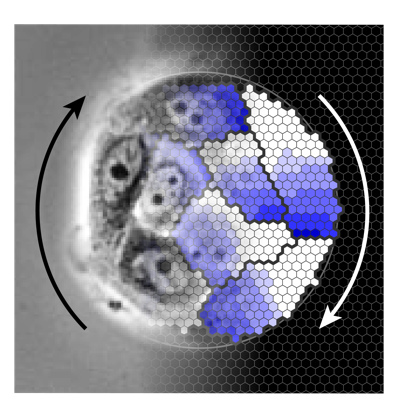
The spontaneous formation of vortices is a hallmark of collective cellular activity. We have studied the onset and persistence of coherent angular motion as a function of the number of cells confined in circular micropatterns. We find that the persistence of coherent angular motion increases with the number of cells but exhibits a pronounced discontinuity accompanied by a geometric rearrangement of cells to a configuration containing a central cell. Computer simulations based on a generalized Potts model reproduce the emergence of vortex states and show in agreement with experiment that their stability depends on the interplay of the spatial arrangement and internal polarization of neighboring cells. Hence, the distinct migrational states in finite size ensembles reveal significant insight into the local interaction rules guiding collective migration.
more
-
Bosons are quantum particles that like to be together. When a dilute gas of bosons is cooled to a temperature close to absolute zero, a macroscopic fraction of the bosons will occupy the energetic ground state of the system; the bosons form a Bose-Einstein condensate. Only recently has it been proposed that bosons may also group into multiple condensates when they are driven by a time-periodic force and dissipate into the environment.
In our manuscript, we show that the condensation of bosons in such a nonequilibrium system corresponds to the selection of strategies in evolutionary game theory. We applied mathematical concepts of this theory to explain why and under which conditions bosons form multiple condensates. We found that the condensation dynamics follows a simple physical guiding principle: the vanishing of relative entropy production guides the selection of condensates.
more
-
The functional relevance of regulating proteins is often restricted to specific binding sites such as the ends of microtubules or actin-filaments. A localization of proteins on these functional sites is of great importance. We present a quantitative theory for a diffusion and capture process, where proteins diffuse on a filament and stop diffusion when reaching the filament's end. It is found that end-association after one-dimensional diffusion is highly efficient as compared to direct binding from solution/cytoplasm. As a consequence, diffusion and capture substantially enhances the reaction velocity of enzymatic reactions, where proteins and filament ends are to each other as enzyme and substrate. We show that the ensuing reaction velocity can effectively be computed within an effective Michaelis-Menten framework. The presented theory is simple yet fully quantitative as it depends only on experimentally accessible parameter values such as binding constants and diffusion coefficients. We predict that diffusion and capture significantly beats the diffusion limit for the rate of direct protein end-association for practically all proteins diffusing on microtubules and actin-filaments.
more
-
Phenotypic heterogeneity and genetic diversity are common strategies of viral and bacterial populations to rapidly adapt to changing environmental conditions. While the maintenance of genetic diversity has recently been subject to extensive studies, little is known about the evolution of phenotypic heterogeneity. Here, we are interested in the conditions that lead to the loss of genetic diversity and the establishment of phenotypic heterogeneity. When does phenotypic specialization dominate in a population and under which conditions is the best strategy for individuals to be generalists?
more
-
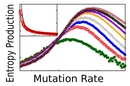
Evolutionary dynamics is determined by mutation and selection within a population, co-evolutionary dynamics between populations, and stochastic noise. Inspired by the
co-evolution of mutating virus and adaptive immune system, we analyze a unified model that includes all three of these forces. Simulation results and theoretical analysis show how
these forces interact in novel and unanticipated ways. For instance, the classical error thresholds for virus and immune system (a maximal mutation rate to avoid delocalization in
genotype space) become interdependent due to co-evolutionary interactions. Further, oscillatory dynamics, which can be of a regular or intermittent type, is only induced by stochastic number fluctuations. By means of advanced techniques for stochastic analysis in high-dimensional nonlinear systems, we show how and when periodic cycling turns into intermittent dynamics. Our model unifies three main forces of co-evolutionary dynamics that have so far been mostly treated separately, and our methods and conclusions should be relevant in many other contexts such as game theory or epidemics.
more
-
The fate of every species depends on its ability to colonize new area and to defend it from invaders. Examples of successful range expansions encompass the human migration out of Africa and the recent spreading of pandemic diseases. unfortunately, natural range expansions are exceedingly complex and experimental control is most often lacking. Such control is, however, needed to calibrate mathematical models that can predict whether a species has the ability to survive. While the study of ecological processes remains a difficult challenge on the global scale, new methods of control are currently emerging for life on the microscopic scale. We investigated range expansion abilities for a system of three Escherichia coli strains: a toxin producing strain, a sensitive strain (facing death upon the encounter of toxins), and a resistant strain. Genetic engineering allowed us to study range expansions of the three strains in different ecological scenarios, including a rock-paper-scissors scenario. We acquired experimental data to calibrate a mathematical model of the bacterial expansion that correctly predicted the strains with successful survival strategies. The model allowed us to describe the relationship between factors that influence a strain’s chance of survival in terms of phenomenological “biodiversity laws”. Our work provides a thorough analysis of the bacterial model system and demonstrates how integration of experimental study with mathematical modelling benefits the understanding of ecological systems.
more
-
The expansion of populations is a ubiquitous phenomenon in nature which includes the spreading of advantageous genes or infectious diseases, and dispersal of species into new territory. Recently, single cell studies have revealed that even genetically identical bacterial populations exhibit phenotypic heterogeneity, which is generally regarded as a bet-hedging strategy to maximize survival. For example, Bacillus subtilis can exist in a motile state, where flagella are used for locomotion, and a non-motile state, where flagella are absent. This heterogeneity allows the population to exploit nutrients at its current location and at the same time disperse to new, possibly more favorable, niches.
more
-
Cell polarization is a prerequisite for essential processes such as cell migration, proliferation or differentiation. The yeast Saccharomyces cerevisiae under control of the GTPase Cdc42 is able to polarize without help of cytoskeletal structures and spatial cues through a pathway depending on its guanine nucleotide dissociation inhibitor (GDI) Rdi1. We show that GDI-mediated polarization provides precise spatial and temporal control of Cdc42 signaling and give experimental evidence for our findings. Cell cycle induce changes of Cdc42 regulation enhance positive feedback loops of active Cdc42 production, and thereby allow simultaneous switch-like regulation of polarity and Cdc42 activation. This regulation drives the direct formation of a unique polarity cluster with characteristic narrowing dynamics and optimized spatial focus.
more
-
Establishment of cell polarity—or symmetry breaking—relies on local accumulation of polarity regulators. Although simple positive feedback is sufficient to drive symmetry breaking, it is highly sensitive to stochastic fluctuations typical for living cells. Here, by integrating mathematical modelling with quantitative experimental validations, we show that in the yeast Saccharomyces cerevisiae a combination of actin- and guanine nucleotide dissociation inhibitor-dependent recycling of the central polarity regulator Cdc42 is needed to establish robust cell polarity at a single site during yeast budding.
more
-
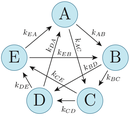
Understanding the stability of ecological networks is of pivotal importance in theoretical biology. An intriguing question is how coexistence and extinction of species depend on the interaction network between species. Is it the topology of the network that sets the level of biodiversity? And how important is the strength of a single interaction link? One paradigm to address these biologically relevant questions from a theoretical point of view is the conservative Lotka-Volterra system. In this work, we introduce a general classification of coexistence scenarios in conservative Lotka-Volterra networks with an arbitrary number of species.
more
-
In cells, long DNA and RNA polymers are formed with the help of sophisticated enzymes.
However, it is unclear how these information-carrying polymers could have spontaneously
formed in the "premordial soup" without enzymes. Here, we demonstrate a mutual positive
feedback between the chemical polymerization reaction and a physical non-equilibrium
process. This feedback circle leads to a dramatic enhancement of the probability to
generate long molecules from dilute solutions of monomers.
more
-
The genomes of all eukaryotic organisms are highly packaged into a dynamic structure termed chromatin. On the lowest level of packaging, the structure consists of a "beads-on-a-string" arrangement, where nucleosome "particles" are connected by free DNA "linkers". A large body of recent experimental and theoretical work suggests that this structure can be appropriately described, on a coarse-grained physical level, within the theory of 1D interacting gas systems. In this work, we study which properties are required of such an interacting gas model to yield a "unified" description of nucleosome patterns in different species.
more
-
Localized wave fronts are a fundamental feature of biological systems from cell biology to ecology. The stability of these wave fronts is often paramount to the fate of these systems. As an example, in the embryogenesis of Drosophila melanogaster the stable localization of the Hunchback protein is pivotal for the embryo's development.
more
-
The length of microtubules and their dynamics underly subtle regulation in a cell. One
important player in microtubule length control are depolymerizing proteins kinesin-8. In
our work we explain a mechanism how these motor proteins are able to efficiently regulate
filament length.
more
-
Reaction-diffusion dynamics provide a versatile framework for intracellular self-organization phenomena. The Min system in E. coli employs such mechanisms to ensure precise cell division by its ability to dynamically adapt to cell geometry. Under which conditions patterns emerge, how patterns are regulated by cell shape, and how such systems can be investigated in cellular geometries are the major aspects considered in our work.
more
-
Microbes providing public goods are widespread in nature despite running the risk of being exploited by free-riders. However, the precise ecological factors supporting cooperation are still puzzling.
more
-
Advances in carbohydrate sequencing technologies have revealed the tremendous complexity of the glycome. Understanding the biological function of carbohydrates requires the identification and quantification of carbohydrate interactions with biomolecules.
more
-
Nanopore translocation experiments are increasingly applied to probe the secondary structures of RNA and DNA molecules. We report two vital steps toward establishing nanopore translocation as a tool for the systematic an quantitative analysis of polynucleotide folding
more
-
Even simple active systems can show a plethora of intriguing phenomena and often we find complexity were we would have expected simplicity.
more
-
Assembly and disassembly dynamics of microtubules (MTs) is tightly controlled by MT associated proteins. Here, we investigate how plus-end-directed depolymerases of the kinesin-8 family regulate MT depolymerization dynamics. Employing an individual-based model, we reproduce experimental findings. Moreover, crowding is identified as the key regulatory mechanism of depolymerization dynamics.
more
-
Much of the complexity observed in gene regulation originates from cooperative protein-DNA binding. While studies of the target search of proteins for their specific binding sites on the DNA have revealed design principles for the quantitative characteristics of protein-DNA interactions, no such principles are known for the cooperative interactions between DNA-binding proteins.
more
-
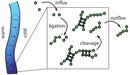
A poorly understood step in the transition from a chemical to a biological world is the emergence of self-replicating molecular systems. We study how a precursor for such a replicator might arise in a hydrothermal RNA reactor, which accumulates longer sequences from unbiased monomer influx and random ligation.
more
-
Existing theoretical models of evolution focus on the relative fitness advantages of different mutants in a population while the dynamic behavior of the population size is mostly left unconsidered. In this work we introduce an agent-based stochastic model which combines the growth dynamics of the population and its internal evolution. Our model thereby accounts for the fact that both evolutionary and growth dynamics are based on individual reproduction events and hence are highly coupled and stochastic in nature.
more
-
The emergence of collective motion such as exhibited by systems ranging from flocks of animals, self-propelled microorganisms or the cytoskeleton is an ubiquitous and fascinating self-organization phenomenon. All these systems display similar phenomenologies, even though the particular underlying physics is genuinely different, ranging from hydrodynamic interaction to steric or inelastic repulsion, attraction, to more complex interactions mediated by linker proteins or molecular motors. Examples for similarities are the inherent polarity of the constituents, a density-dependent transition to ordered phases or the existence of huge density fluctuations. This suggests universal organizing principles underlying pattern formation; an idea followed by hydrodynamic models valid on large scales.
more
-
Within the last five years, knowledge about nucleosome organization on the genome has grown dramatically. To a large extent this has been achieved by an increasing number of experimental studies determining nucleosome positions at high resolution over entire genomes. Particular attention has been paid to promoter regions, where a canonical pattern has been established: a nucleosome free region with pronounced adjacent oscillations in the nucleosome density. In our study, we tested to what extent this pattern may be quantitatively described by a minimal physical model, a one-dimensional gas of impenetrable particles, commonly referred to as the “Tonks gas”.
more
-
The capacity to reprogram and control cell functions in a specified manner is needed in many areas of biotechnology, bioengineering and medicine. Biological “computers”, or “automata” have been proposed as a way to achieve this capacity. These systems are modular biological networks that in principle should be able to convert an arbitrary specified set of biological input signals into specified responses (output) according to a desired set of rules, or program. Challenging aspects hereby are modularity, programmability as well as scalability of a given system.
more
-
Systems with a large number of interacting particles are almost always too complex to analyse on the level of individual particle variables. In equilibrium thermodynamics, entropy is a global variable - applying to the system as a whole - that very efficiently characterizes the system's behaviour. However, many biological and ecological systems operate far from thermal equilibrium, and therefore the concept of thermodynamic entropy can no longer be naively applied to them. Still, it is very desirable to find global variables that provide a characterization of the system.
more
-
One aim of modern biotechnology is the controlled assembly and manipulation of structures. The simplest building blocks for constructing structures are rodlike polymers. The next higher level of complexity concerning building blocks is achieved with ringlike polymers. On the nano scale level the effective shape of such building blocks is governed by the interplay of entropic forces on the one hand and elastic stiffness and steric hindrance of the polymer segments on the other hand. Entropic forces lead to a coiled, cigar-like shape. This is opposed by elastic bending stiffness, which favors non-curved conformations. This poses the question how strong each of these molecular based forces contribute and how they affect the resulting shape of the building blocks.
more
-
200 Jahre nach Darwins Geburt und 150 Jahre nach dem Erscheinen seines revolutionären Werkes „Die Entstehung der Arten“ wissen wir: Evolution ist weit mehr als eine interessante Theorie, sie ist unvermeidlicher Fakt.Doch die Implikationen der so einfachen wie fundamentalen Gesetzmäßigkeit von Mutation, Vererbung und Auslese bergen immense Komplexität und werfen noch viele offenen Fragen auf. An Einzellern lässt sich Evolution in Echtzeit studieren und, in Verbindung mit Konzepten der statistischen Physik, einige ihrer grundlegenden Mechanismen aufdecken.
more
-
The struggle for survival between competing bacteria species in a petri dish can create beautiful spiral patterns until one type conquers all the available space, destroying the entangled structure. Kerr and colleagues made this observation when they mixed three E. coli populations exhibiting cyclic dominance: A beats B beats C beats A. As derived by Tobias Reichenbach, Mauro Mobilia, and Erwin Frey, the mobility of the bacteria, that is, their spatial relocation rate, is crucial for the stability of coexistence. An applet recently published on The Wolfram Demonstrations Project allows anyone to simulate a spatial rock-paper-scissors game and observe the role mobility plays, whereas another applet shows the evolution of such populations if spatial effects are ignored.
more
-
Microorganisms employ a wealth of gene regulatory mechanisms to adjust their growth programs to variations in the environment. It was pointed out long ago by Savageau that the particular mode of gene regulation employed may be correlated with the “demand” on the regulated gene, i.e., how frequently the gene product is needed in its natural habitat. An evolutionary “use-it-or-lose-it” principle was proposed to govern the choice of gene regulatory strategies.
more
-
Translocation through nanopores has emerged as a new experimental technique to probe the physical properties of biomolecules. The question of how the typical translocation time for a single unstructured polymer depends on its length has already triggered many theoretical and computational studies. We address this question for structured RNA molecules where the breaking of base-pairing patterns is the main barrier for translocation.
more
-
Up to 50 species extinct each day on earth. While this large number is supposedly due to human influence, a certain rate of species extinction is unavoidable. It reflects competition of different
species as well as their (missing) ability to adapt to changing environments. Together with speciation (meaning the formation of new species) and selection it allows for evolutionary change. In the common understanding of Darwinian evolution, this change tends to increase fitness, as of two competing species the "stronger" one survives.
more
-
Chip-based fluidic systems offer enormous prospects for analyzing,
sorting, and manipulating complex molecules such as DNA and proteins. To
this end, much fundamental research, both experimental and theoretical, is
still required. We contribute a theoretical study on an obstacle for these
applications: the formation of knots in long polymers, e.g. DNA, upon
threading into narrow channels or pores.
more
-
Biodiversity in ecological systems is often maintained by
self-arrangement of the interacting individuals into spatial patterns.
In our article, we investigate the effects of such self-organizing
spatial patterns theoretically, and find that, in most cases, they
support species diversity. However, we also identify a situation where a
convective (Eckhaus) instability of patterns results in rapid species
extinction.
more
-
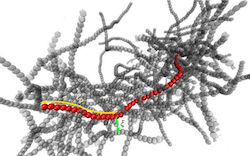
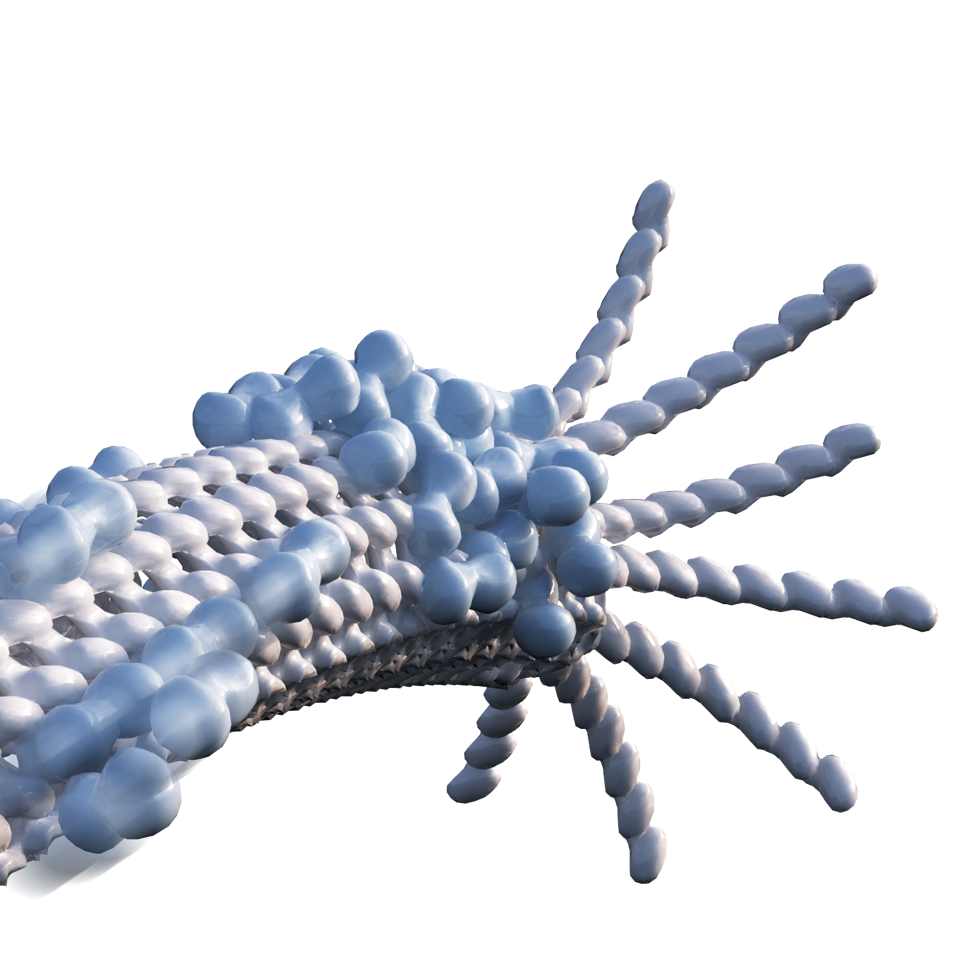
Microtubules are cytoskeletal protein filaments that play an essential role in a multitude of cell functions in all eucaryotes. While specialized structures such as cilia, flagellae and axons require microtubule lengths of up to several hundred micrometers, fundamental tasks like cell division and intracellular transport involve microtubules with lengths that are comparable to or smaller than typical eucaryotic cell sizes (10-20 micrometer).The standard model for semiflexible polymers is the wormlike chain which envisions a homogeneous, isotropic, continuously flexible rod characterized by its bending stiffness. We have shown that this standard model fails for microtubules, mainly due to the highly anisotropic molecular architecture where protofilaments are arranged in parallel to form a hollow tube of 25 nanometer in diameter.
more
-
Noise and spatial degrees of freedom characterize pattern formation in biological systems. As an example, laboratory experiments on microbial communities have shown that different bacterial strains on Petri dishes self-organize into irregular clusters if bacteria are static. However, the theoretical description of such noisy, out-of-equilibrium patterns constitutes considerable challenges. Here, we devise an analytic approach that is generally applicable when individuals are mobile. Recently, we have shown that mobility has crucial impact on the maintenance of biodiversity in ecological systems. Here, we explore the influence of mobility on pattern formation properties.
more
-
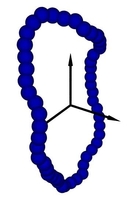
Following the trajectory of a random walk or likewise a flexible polymer one finds that the typical overall shape is cigar-like, prolate. Intuitively one would assume a spherical appearance, but this implies rotational averaging. Flexible and moreover semiflexible polymers are the building blocks of various biological processes, since DNA and cytoskeletal filaments belong to the class of semiflexible polymers. The shape of a polymer is important for its mobility in heterogeneous media like the cytoplasm, the depletion forces between larger complexes in polymer solution or the accessibility of specific sites along the polymer to enzymes. Our recent work shows that semiflexible polymer rings such as DNA plasmids or viral DNA exhibit distinct shapes depending on their flexibility.
more
-
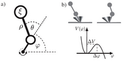
Conformational transitions in macromolecular complexes often involve the reorientation of lever-like structures. Using a simple theoretical model, we show that the rate of such transitions is drastically enhanced if the lever is bendable, e.g. at a localized "hinge". Surprisingly, the transition is fastest with an intermediate flexibility of the hinge. In this intermediate regime, the transition rate is also least sensitive to the amount of "cargo" attached to the lever arm, which could be exploited by molecular motors. To explain this effect, we generalize the Kramers-Langer theory for multi-dimensional barrier crossing to configuration dependent mobility matrices.
more
-
For a comprehensive picture of the viscoelasticity of cellular material a thorough understanding of single molecule properties is necessary, in particular of the response of single filaments under force. Biological examples include cytoskeletal polymers such as actin or microtubules, but also stretched DNA, which by now is almost ubiquitious in single-molecule experiments. The large bending stiffness of these polymers makes their static and dynamic features highly anisotropic: fluctuations and response are larger in the transverse direction (perpendicular to the local tangent) than in the longitudinal one. However, these filaments are also nearly inextensible, and motion in the two directions is therefore not independent. We show that beyond the linear level, where the coupling between transverse and longitudinal dynamics is not yet relevant, the dynamic response to transverse forces becomes nonlinearly coupled to the longitudinal one, even in the weakly-bending limit of an almost straight contour.
more
-
An astonishing biodiversity exists within the earth's ecosystems. While being of essential importance to the viability of ecological systems, conceptual explanations of such diversity pose major challenges. Indeed, in a naive understanding of Darwinian evolution, two interacting species would compete for resources until only the fitter one survives (competitive exclusion principle). Non-hierarchical competitions between species have been found to help resolving this apparent paradox, and promote biodiversity.
more
-
To ensure adaptability of cytoskeletal organization cells exploit the dynamic interplay between semi-flexible filamentous polymers such as microtubules or F-actin using a multitude of associated binding proteins. In particluar, the local elastic properties are regulated by the activation of auxiliary proteins which e.g. cross-link and/or bundle the filamentous networks into complex scaffolds. In this Letter we show that above a critical concentration of the actin binding protein (ABP) fascin, a solution of actin filaments organizes into a homogeneous network whose building blocks are bundles only.
more
-
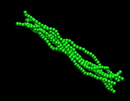
The wormlike chain (WLC) has emerged as the standard model for the description of semiflexible polymers. The defining property of a WLC is a mechanical bending stiffness that is an intrinsic material constant of the polymer. Within this framework, numerous correlation and response functions have been calculated, providing a comprehensive picture of the equilibrium and dynamical properties of WLCs. Another important emerging class of semiflexible polymers consists of bundles of WLCs. Unlike standard WLCs, wormlike bundles (WLB) have a state-dependent bending stiffness that derives from a generic interplay between the high stiffness of the individual filaments and their soft relative sliding motion. We demonstrate that this state-dependence gives rise to fundamentally new behavior that cannot be reproduced trivially using existing relations for WLCs. In an article just published in PRL we explore the consequences of a state-dependent bending stiffness on the statistical mechanics of isolated WLBs, as well as on the scaling behavior of their entangled solutions and crosslinked networks.
more
-
With help of a light microscope one can see single chromosomes, the closest packed form of DNA. Not only during cell division, but throughout the whole cell cycle, DNA in eucaryotes is packed in one way or another. On the smallest scale, DNA is wrapped around histones and forms nucleosomes. The readout of information - between cell divisions - is controlled by so called transcription factors, which can bind to DNA without ATP consumption. How can that be if DNA is packed?
more
-
Materials as different as granular matter, colloidal suspensions or lithospheric block systems share the common property that they may exist in a highly fragile state. While in principle able to withstand static shear stresses, small changes in the loading conditions may lead to large scale structural rearrangements or even to the complete fluidization of the material. To understand the extraordinary mechanical properties of these systems new concepts have to be developed that go beyond the application of classical elasticity theory and that sufficiently reflect the presence of the microstructure.
more
-
Bundles of filamentous actin (F-actin) form primary structural components of a broad range of cytoskeletal processes including filopodia, sensory hair cell bristles and microvilli. Actin-binding proteins (ABPs) allow the cell to tailor the dimensions and mechanical properties of the bundles to suit specific biological functions. Therefore, it is important to obtain quantitative knowledge on the effect of ABPs on the mechanical properties of F-actin bundles. Here we measure the bending stiffness of F-actin bundles crosslinked by three ABPs that are ubiquitous in eukaryotes. We observe distinct regimes of bundle bending stiffness that differ by orders of magnitude depending on ABP type, concentration and bundle size.
more
-
Cars jamming in city centers or on highways belong to our every-day experience. In the present work, we theoretically explore such traffic phenomena occurring at a much smaller size, on the nanometer scale. At these tiny lengths, the fields of biological physics and information technology become increasingly intertwined. Still, different paradigms rule in these areas. Brownian motion governs biological systems, e.g., it drives molecular motors along parallel one-dimensional filaments in cells, serving as transport engines. On the other hand, quantum effects become visible in the field of electronic information processing.
more
-
We find that microtubules, essential structural elements in living cells, grow stiffer as they grow longer, an unexpected property that could lead to advances in nano-materials development.
more